
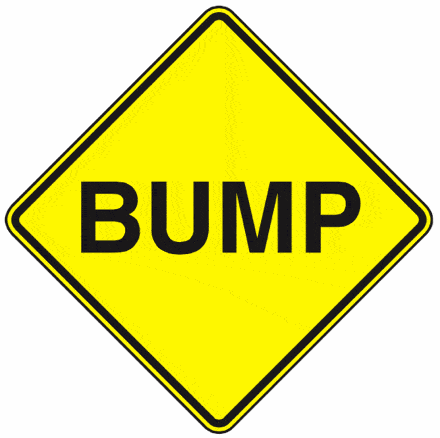
Speed bumps and speed humps are used to slow traffic and help improve safety on roads and in parking lots. Although the names are similar, their designs and intended uses differ. Understanding those differences helps you choose the right speed control product for your property.
Speed Bumps vs. Speed Humps
Both devices encourage drivers to reduce their speed. Speed bumps create a more abrupt slowdown and are generally used in parking lots and driveways. Speed humps have a more gradual profile and are generally used on roads with low speed limits.
Speed Bumps for Parking Lots and Driveways
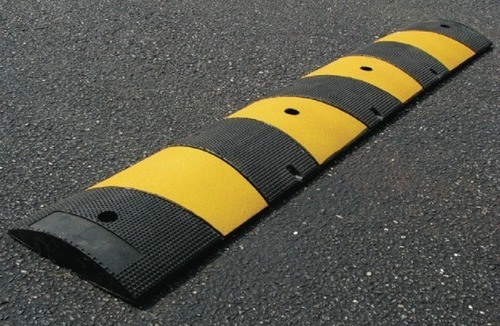
Speed bumps are commonly used in parking lots, where posted speeds are often 5–10 mph. They encourage drivers to slow to approximately 2–5 mph when crossing the bump. Heights vary by product, with some designs measuring 3–6 inches.
Speed bump placement, spacing, and installation requirements depend on the location and product. Check your local jurisdiction’s requirements and follow the manufacturer’s installation instructions.
Because speed bumps have an abrupt raised profile, crossing them too quickly can be hard on vehicles, especially emergency vehicles, trucks, and other large vehicles.
Speed Humps for Roads with Low Speed Limits
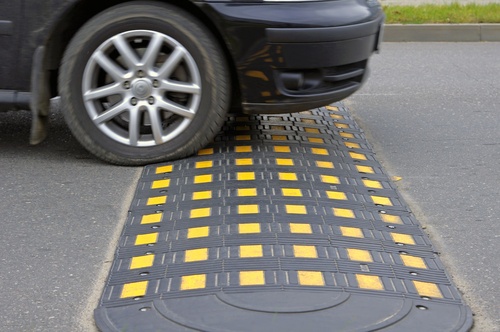
Speed humps have a longer, more gradual profile than speed bumps. Typical roadway speed humps encourage crossing speeds of approximately 15–20 mph, depending on the design. They are often around 3.5 inches high and painted or marked to alert drivers. Modular speed humps are available as sections and end caps.
As with speed bumps, local requirements help determine where and how speed humps can be installed. Common settings include private roads serving neighborhoods, parks, and campuses. Their gradual profile encourages drivers to slow down more smoothly, helping improve safety for drivers and pedestrians.
Should You Choose Speed Bumps or Speed Humps?
These general guidelines can help you choose the right speed control device for your location:
- Choose speed bumps for parking lots and driveways where very slow speeds are needed. They encourage drivers to slow to approximately 2–5 mph and can cause noticeable discomfort when crossed at higher speeds.
- Choose speed humps for suitable private roads with low speed limits. Their more gradual profile typically encourages crossing speeds of approximately 15–20 mph, with less abrupt movement than a speed bump.
Both speed bumps and speed humps are designed to calm traffic and help improve safety for pedestrians and cyclists. In general, speed humps suit roads with low speed limits, while speed bumps are better suited to parking lots and driveways.
Allstate Sign & Plaque offers products for a range of speed control needs. Our traffic control products include speed bumps and speed humps, along with traffic barricades, parking curbs, and traffic cones.
If you’re unsure which product suits your location, contact us. Our team can help you find a product that meets your needs.